
Words and Wildflowers Creative Prompts – Issue 55
Posted on July 28, 2025
We LOVE research and learning as a way to get inspired and boost ideas and creativity!! So, Kenzie and I are going to be sharing the inspiration that we collect here in our second newsletter…. once a week!!!
Here’s how it works:
We provide the inspiration. You interpret it however you wish… any medium, any size. It is meant to inspire lettering and floral art combined together. But, you can:
- Just do the florals, just do the lettering, or combine them together.
- Use the provided quote for your piece or select your own.
- Use colors from one of the inspiration images or select your own favorites
- Create the floral art… as a still life in a vase, a single flower, a border, a pattern, a bouquet
Hope you will create with us and post your work at #wordsandwildflowers2024 and tag @lorisiebert.studio and @snippetsofwhimsy
Quote of the week…
“Laughter is timeless. Imagination has no age. And dreams are forever.”
– Walt Disney
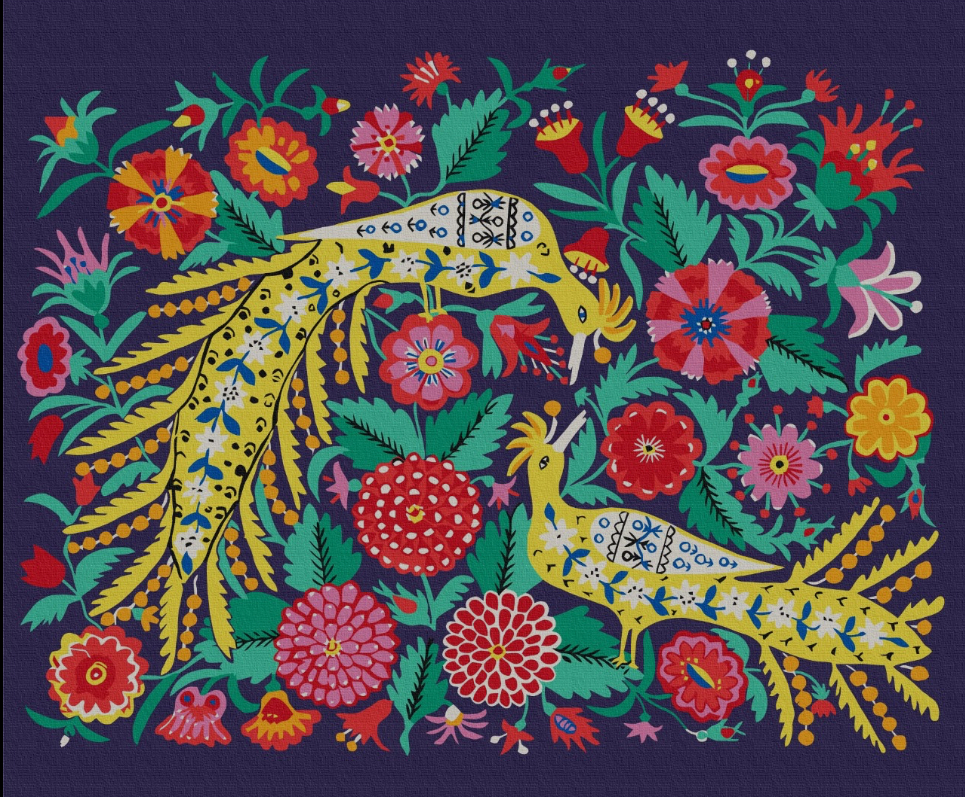
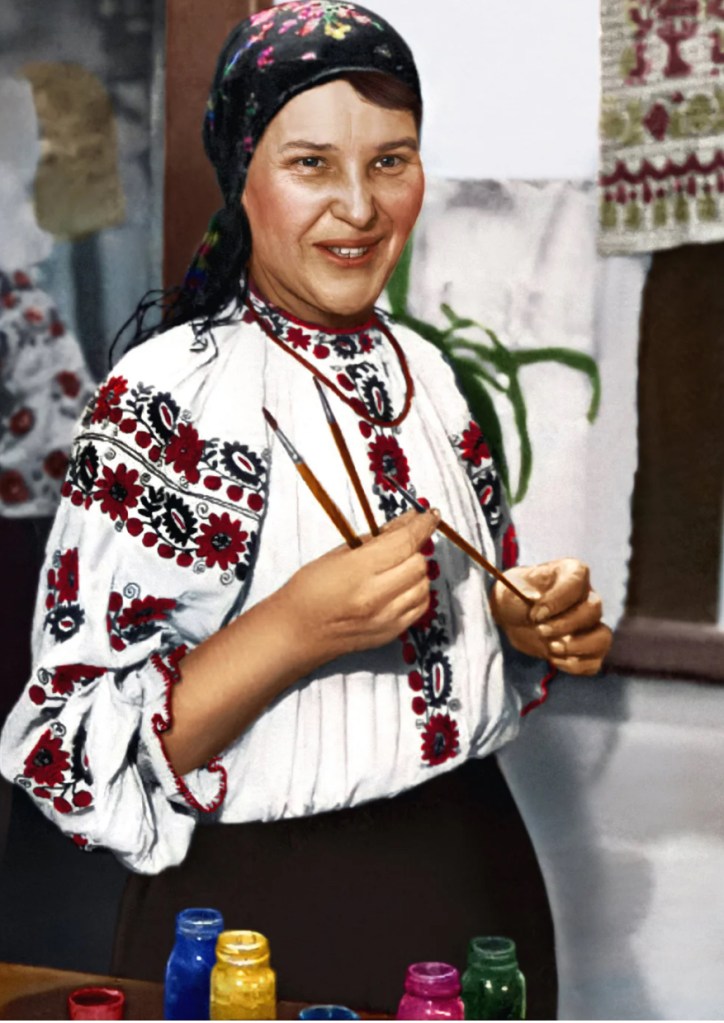
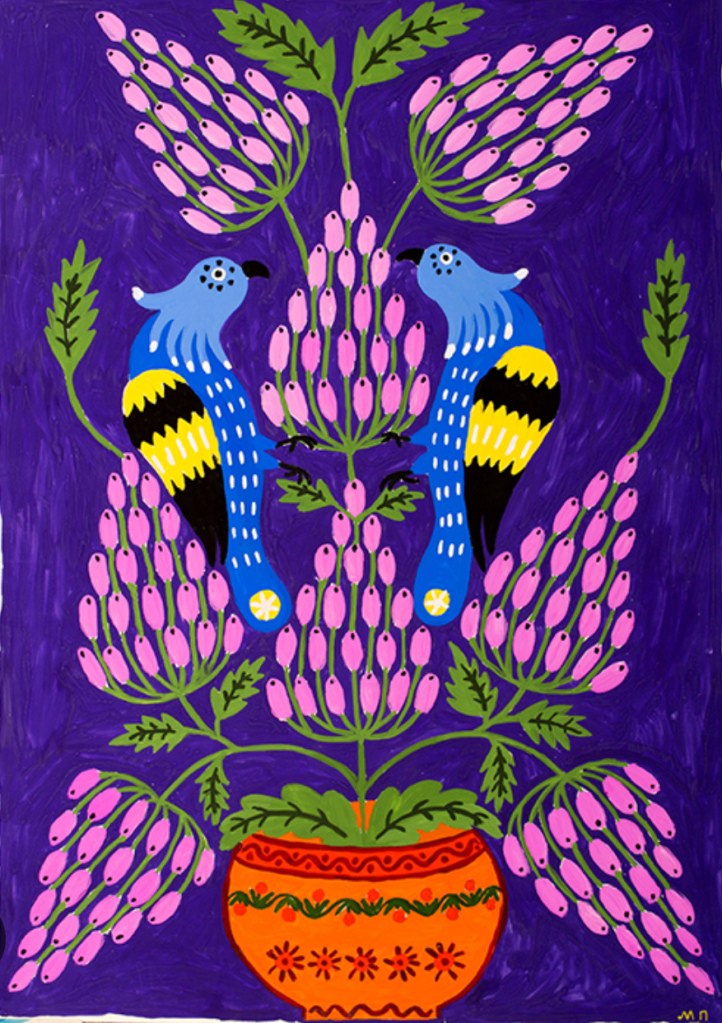
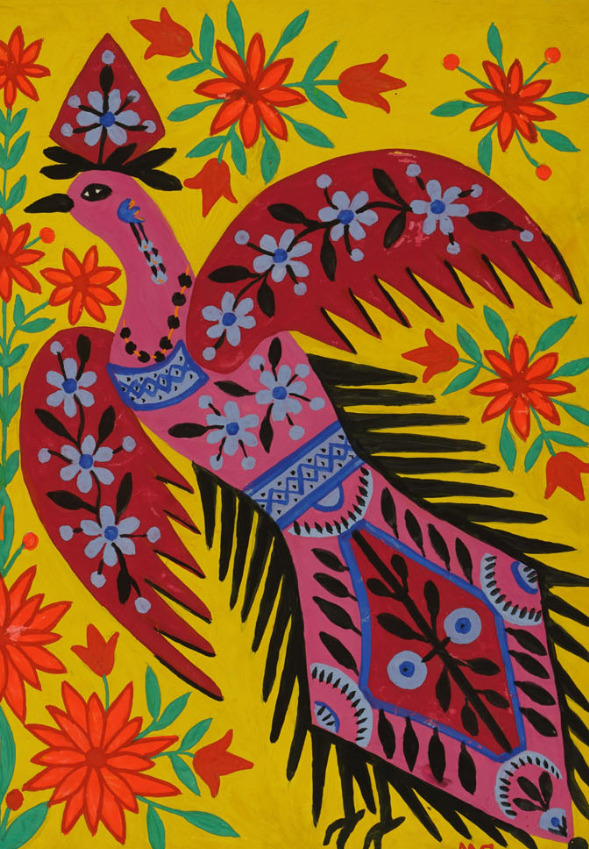
Inspiring artist of the week: Maria Prymachenko
Maria Prymachenko was born in 1909 into an artistically talented rural family in the village of Bolotnia. Her mother did embroidery, her father was a carpenter, and her grandmother painted Easter eggs. Just like another outstanding female artist—the surrealist painter Frida Kahlo—Prymachenko suffered from polio as a child, and she also wore long, hand-embroidered skirts to conceal her paralyzed leg.
She learned to draw, paint, and embroider at home. Even though she never acquired any artistic qualifications and had just four years of primary education, she became a professional embroiderer at the turn of the 1920s and 1930s. For the next few years, she worked in nearby Ivankiv until her talents were discovered in 1935 by Tetiana Floru, a textile artist and embroiderer linked to the Ukrainian Folk Decorative Art Museum in Kyiv. Some say she was impressed by Prymachenko’s embroidered shirts on sale at an Ivankiv market. Others claim that Floru was sent out by the Soviet authorities (initially, USSR cultural policy welcomed naïve folk art) to travel around the villages in search of folk artists and was enchanted by Maria’s embroidery on display at a cultural center.


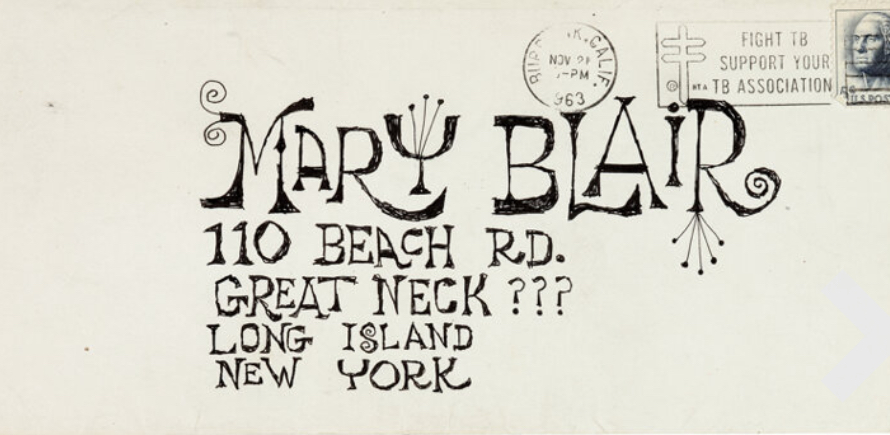
Hand lettering inspiration of the week: Rolly Crump
Rolly Crump was born in Alhambra, California, and joined Walt Disney Studios in 1952. Initially he worked on inbetweening, before becoming an assistant animator on movies including Peter Pan, Lady and the Tramp, Sleeping Beauty, and One Hundred and One Dalmatians. In 1959 he joined WED Enterprises (later Walt Disney Imagineering) and became a designer of some of Disneyland’s attractions and shops, including The Haunted Mansion, Enchanted Tiki Room and Adventureland Bazaar.As well as his work at Disney, he designed innovative and satirical psychedelic posters in the early and mid 1960s, including several for the West Coast Pop Art Experimental Band as well as logos for the band’s singer Bob Marley. He also designed guitar string packaging for Ernie Ball.
He was responsible for designing many of the Disney attractions at the 1964 New York World’s Fair, including It’s a Small World, and its Tower of the Four Winds marquee. In 1966, when the attraction moved to Disneyland, he designed the large animated clock at the entrance that sends puppet children on a parade.
He contributed to early designs of the Magic Kingdom at Walt Disney World in Florida, and worked on designs for NBC’s Disney on Parade in 1970, before leaving Disney to work on outside projects including Busch Gardens, the ABC Wildlife Preserve in Maryland, and Ringling Brothers & Barnum and Bailey Circus World. In 1975, Knott’s Berry Farm opened Knott’s Bear-y Tales, a dark ride designed by Crump.In 1976 he returned to work for Disney, designing the Land and Wonders of Life pavilions at the Epcot Center, before leaving again in 1981 to design the proposed Cousteau Ocean Center in Norfolk, Virginia, and to set up his own business, the Mariposa Design Group, which developed projects in Oman, Las Vegas, Denver and elsewhere. Crump finally returned to Disney in 1992 as executive designer at Imagineering, working on EPCOT Center.
He retired from Disney in 1996, and published an autobiography It’s Kind of a Cute Story in 2012.


 Lori Siebert & Co.