
Words and Wildflowers Creative Prompts – Issue 58
Posted on August 18, 2025
We LOVE research and learning as a way to get inspired and boost ideas and creativity!! So, Kenzie and I are going to be sharing the inspiration that we collect here in our second newsletter…. once a week!!!
Here’s how it works:
We provide the inspiration. You interpret it however you wish… any medium, any size. It is meant to inspire lettering and floral art combined together. But, you can:
- Just do the florals, just do the lettering, or combine them together.
- Use the provided quote for your piece or select your own.
- Use colors from one of the inspiration images or select your own favorites
- Create the floral art… as a still life in a vase, a single flower, a border, a pattern, a bouquet
Hope you will create with us and post your work at #wordsandwildflowers2024 and tag @lorisiebert.studio and @snippetsofwhimsy
Quote of the week…
“Instructions for living a life: Pay attention. Be astonished. Tell about it.”
—Mary Oliver
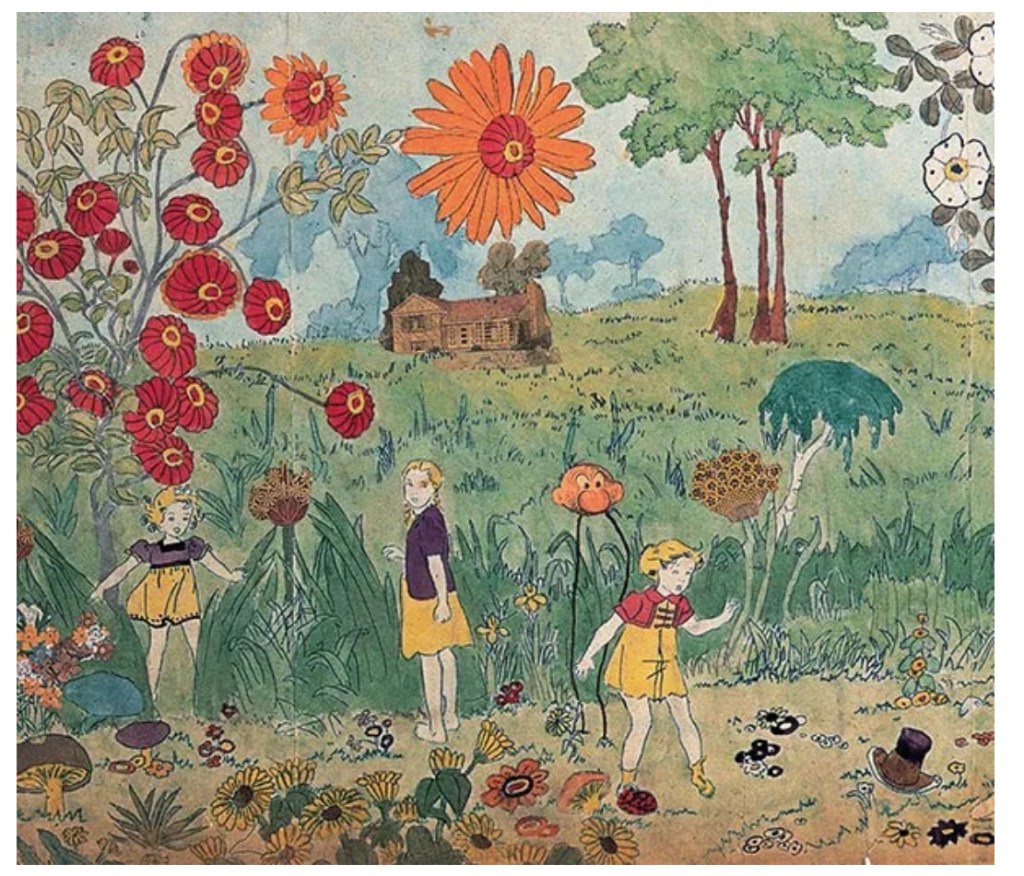
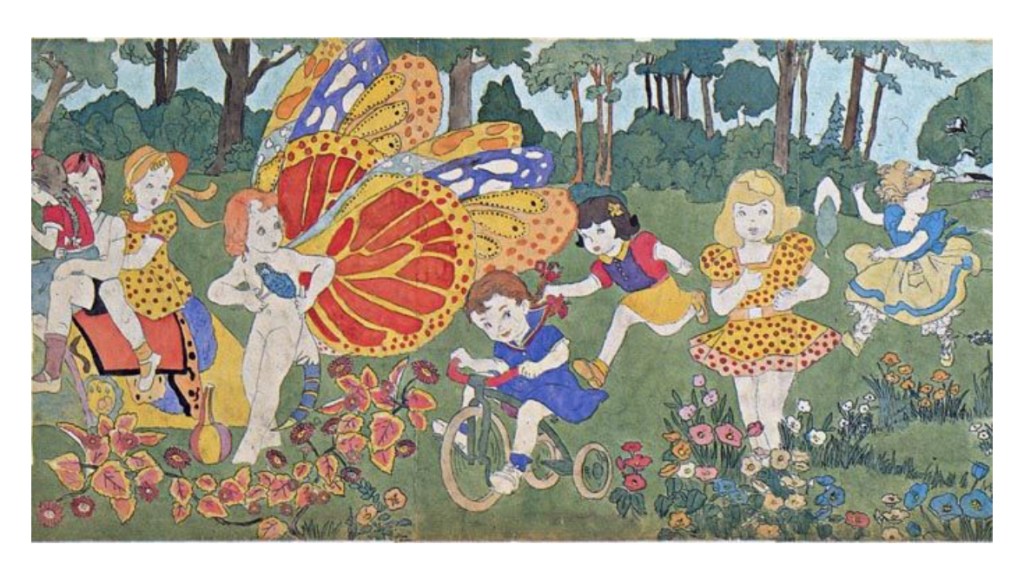
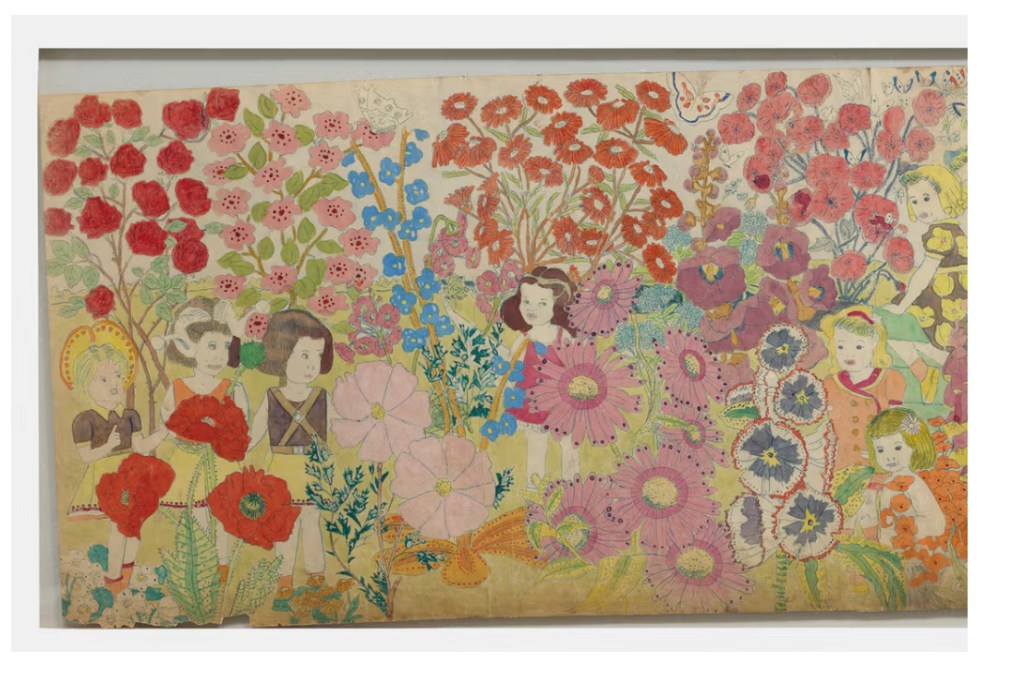
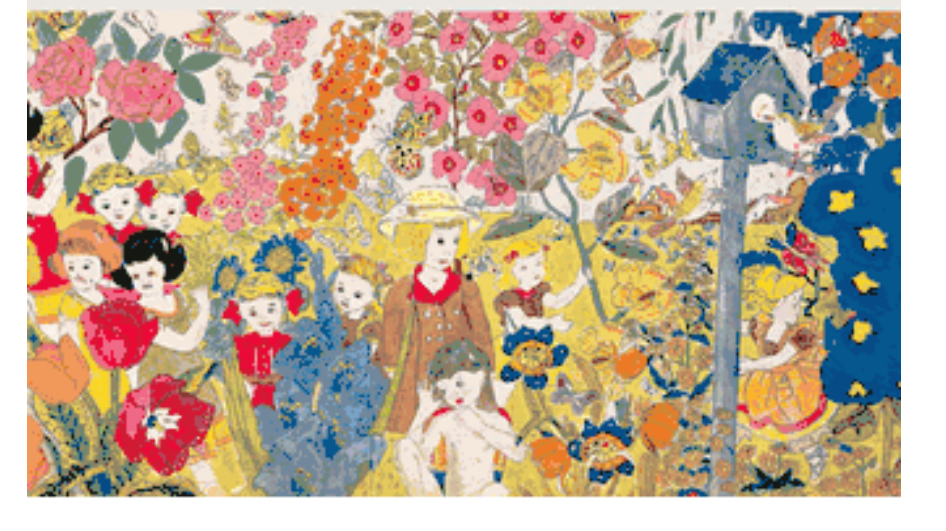
Inspirational artist of the week: Henry Darger
Henry Joseph Darger Jr. April 12, 1892 – April 13, 1973) was an American janitor and hospital worker who became known after his death for his immense body of outsider art—art by self-taught creators outside the mainstream art community.
Darger was raised by his disabled father in Chicago. Frequently in fights, he was put into a charity home as his father’s health declined, and in 1904 was sent to a children’s asylum. He began making escape attempts after his father’s death in 1908, and in 1910 was able to escape, walking much of the way to Chicago. As an adult he did menial jobs for several hospitals, interrupted by a brief stint in the U.S. Army during World War I. He spent much of his life in poverty and in later life was a recluse in his apartment. A devout Catholic, Darger attended Mass multiple times per day and collected religious memorabilia. Retiring in 1963 due to chronic pain, he was moved into a charity nursing home in late 1972, shortly before his death. During this move, his landlord Nathan Lerner discovered his artwork and writings, which he had kept secret over decades of work.
From around 1910 to 1930, Darger wrote the 15,145 page novel In The Realms of the Unreal, centered on a rebellion of child slaves on a fantastical planet. The Vivian Sisters, the seven princesses of Abbeiannia, fight on behalf of the Christian nations against the enslaving Glandelinians. Inspired by the American Civil War and martyrdom stories, it features gruesome descriptions of battles, many ending with the mass killing of rebel children. Between 1912 and 1925, Darger began producing accompanying collages, often only loosely correlated to the book. Later he made watercolors with traced or overpainted figures taken from magazines and children’s books. These grew more elaborate over time, with some of his largest works approaching 10 feet (3 m) in length. Little girls, often in combat, are a primary focus of his work; for unknown reasons, they are frequently depicted naked and exclusively with male genitalia. Other writings by Darger include a roughly 8,000-page unfinished sequel to In The Realms of the Unreal entitled Further Adventures of the Vivian Girls in Chicago, a decade-long daily weather journal, and The History of My Life—consisting of a 206 page autobiography followed by 4,600 pages detailing a fictional tornado named “Sweetie Pie”.
Darger’s work was unknown to others until after his death, leading to his association with the outsider art movement.


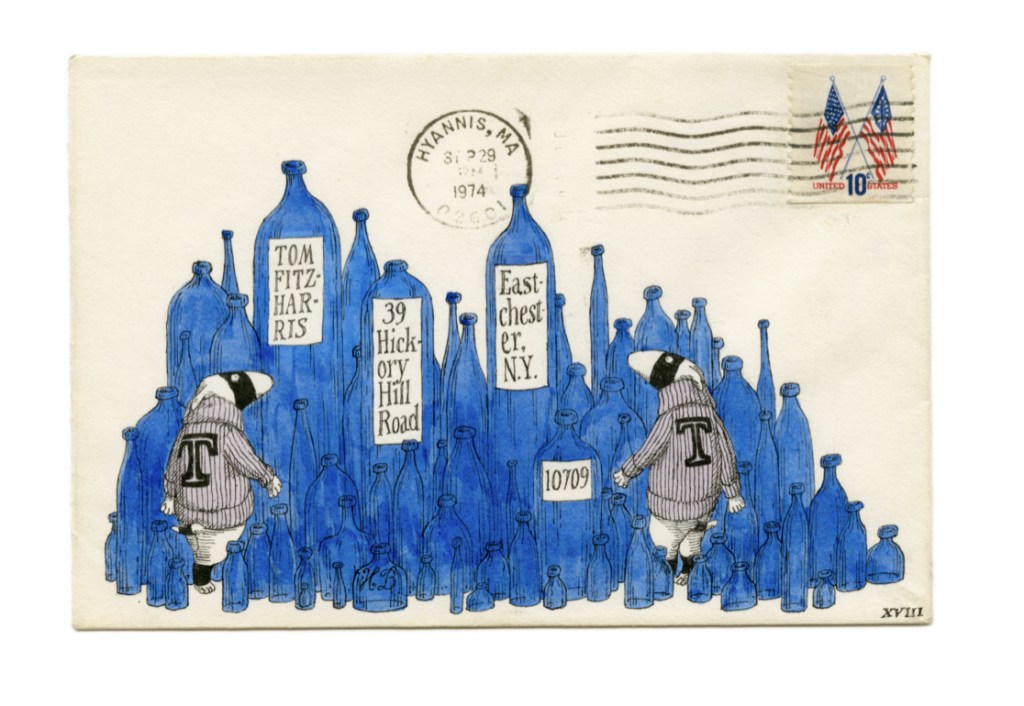
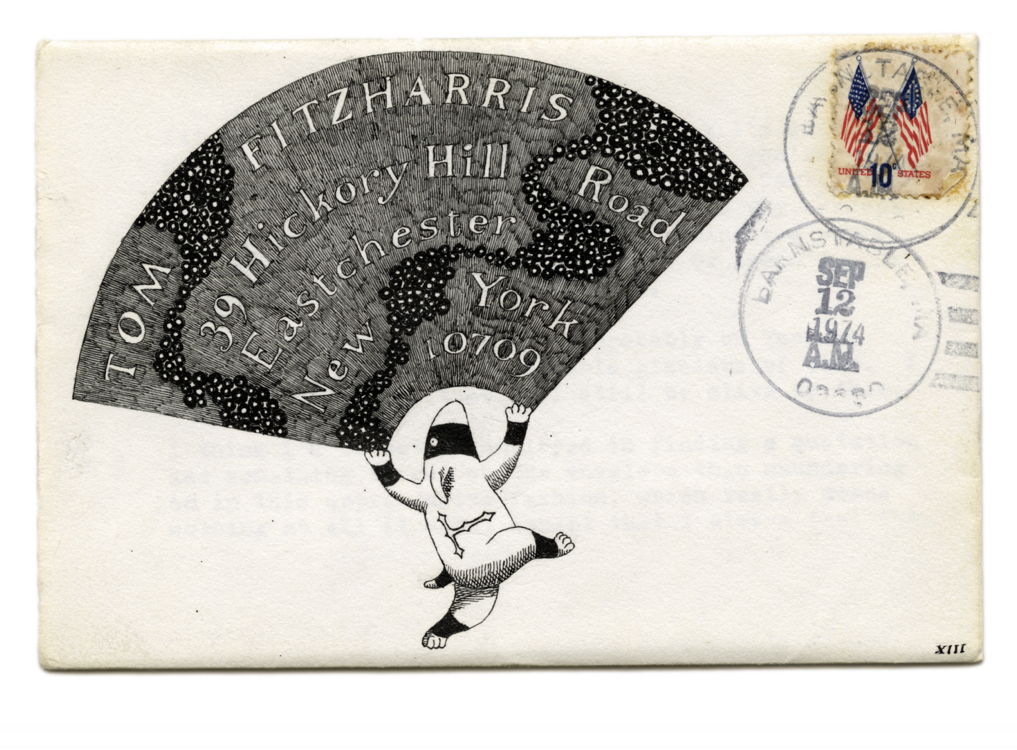
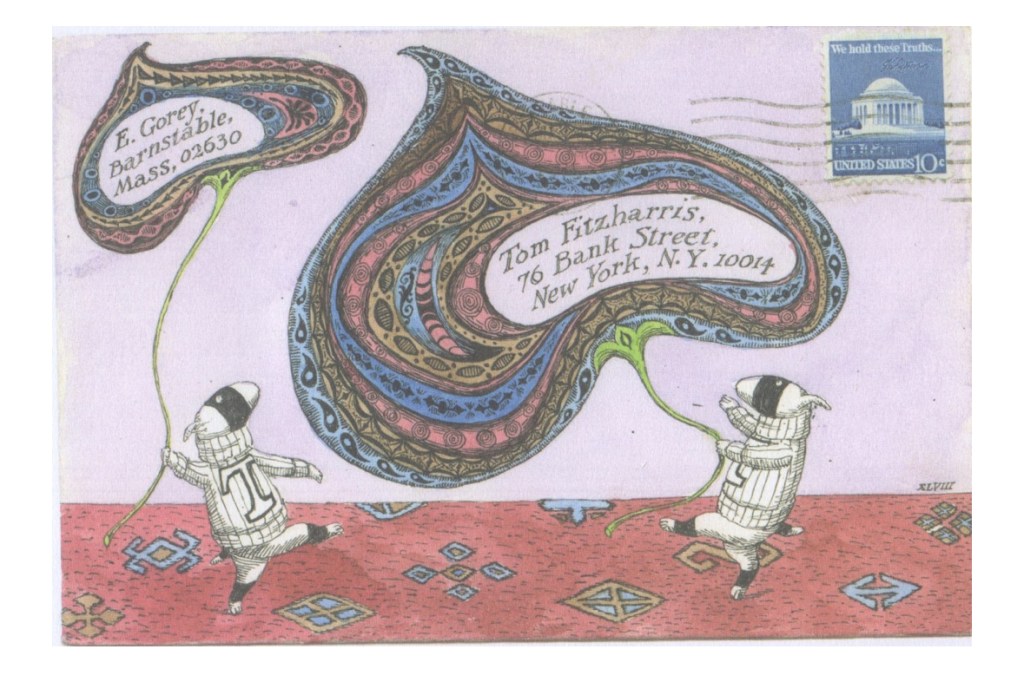
Hand lettering artist of the week: Edward Gorey
When Tom Fitzharris met Edward “Ted” Gorey in 1974, the two quickly struck up a friendship. Over the next year Gorey sent a total of fifty letters to Fitzharris. Every envelope Fitzharris received was illustrated by Gorey, and filled with surprises: typewritten letters with news and opinions from Gorey’s life, handwritten note cards with unexpected quotes, sketches, inside jokes, and a host of other joyous miscellany.


Words and Wildflowers Creative Prompts – Issue 57
Posted on August 11, 2025
We LOVE research and learning as a way to get inspired and boost ideas and creativity!! So, Kenzie and I are going to be sharing the inspiration that we collect here in our second newsletter…. once a week!!!
Here’s how it works:
We provide the inspiration. You interpret it however you wish… any medium, any size. It is meant to inspire lettering and floral art combined together. But, you can:
- Just do the florals, just do the lettering, or combine them together.
- Use the provided quote for your piece or select your own.
- Use colors from one of the inspiration images or select your own favorites
- Create the floral art… as a still life in a vase, a single flower, a border, a pattern, a bouquet
Hope you will create with us and post your work at #wordsandwildflowers2024 and tag @lorisiebert.studio and @snippetsofwhimsy
Quote of the week…
“The world is full of magic things, patiently waiting for our senses to grow sharper.”
— W.B. Yeats
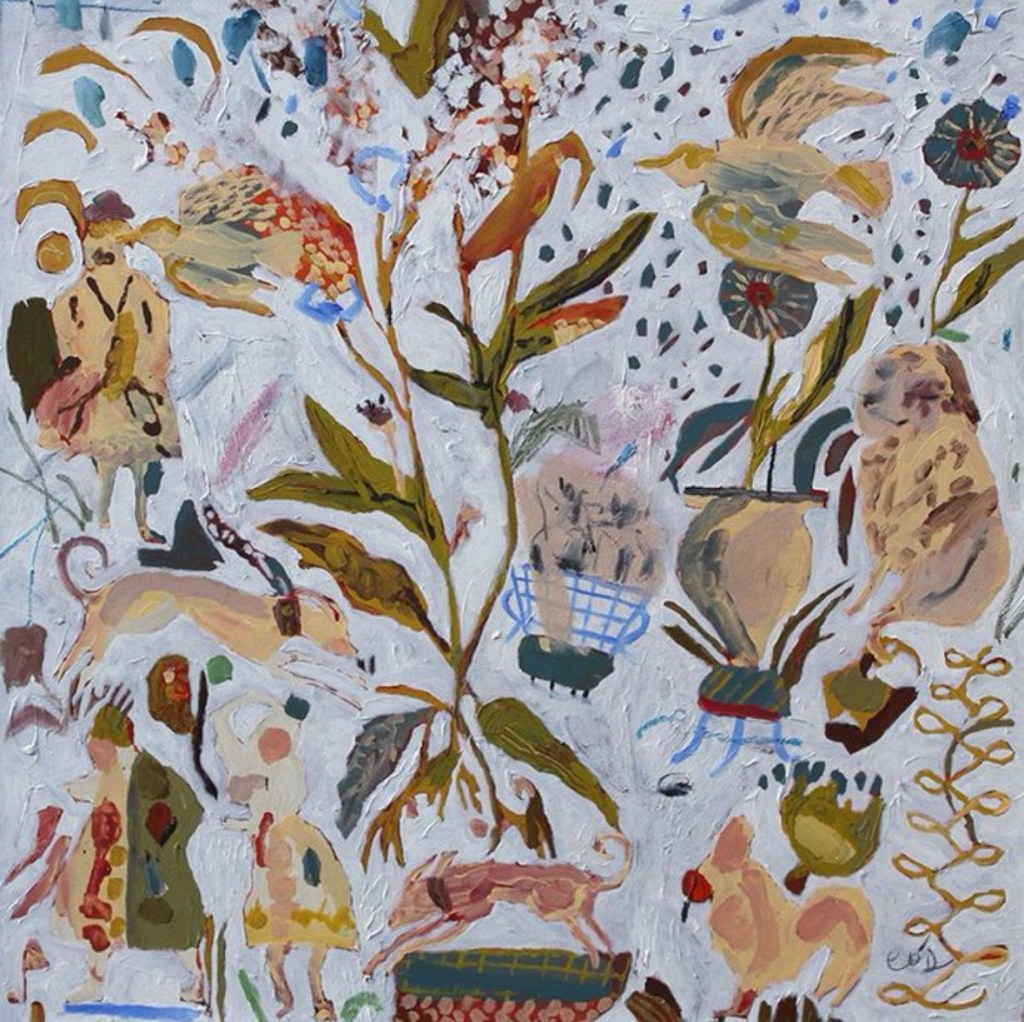
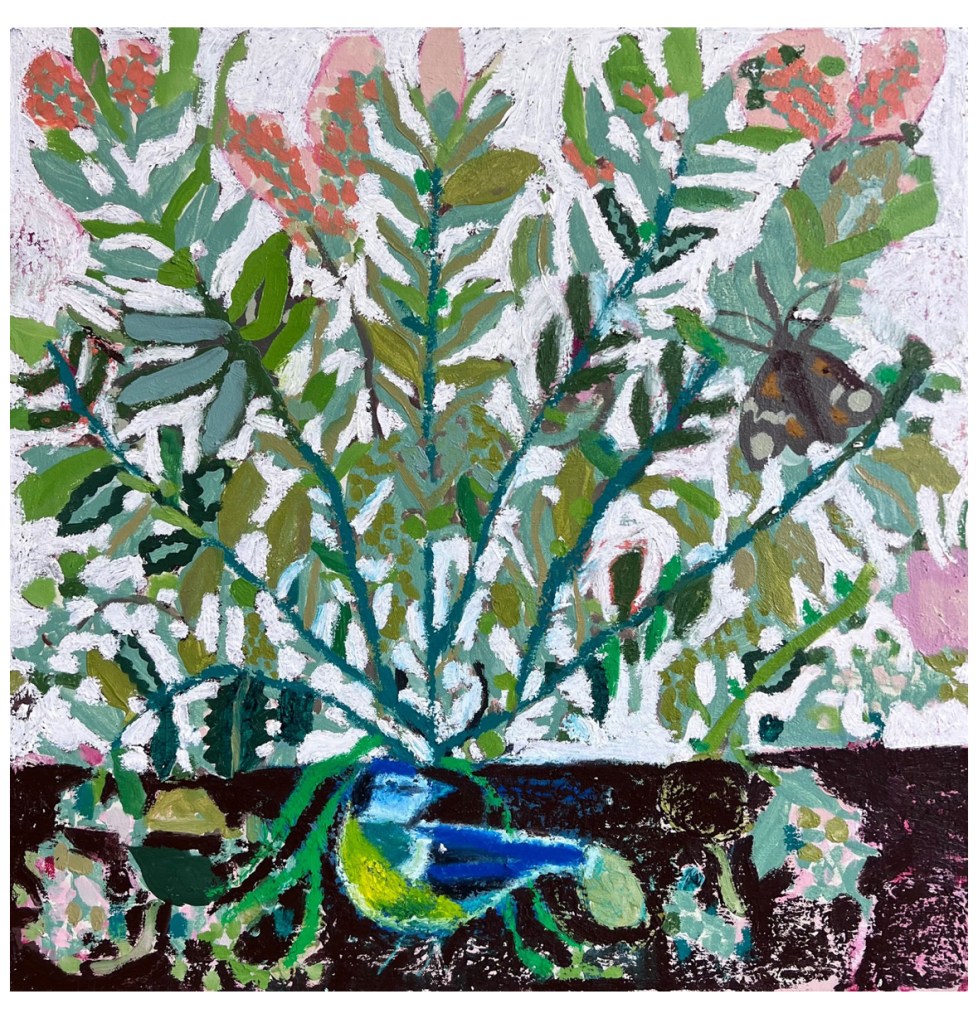
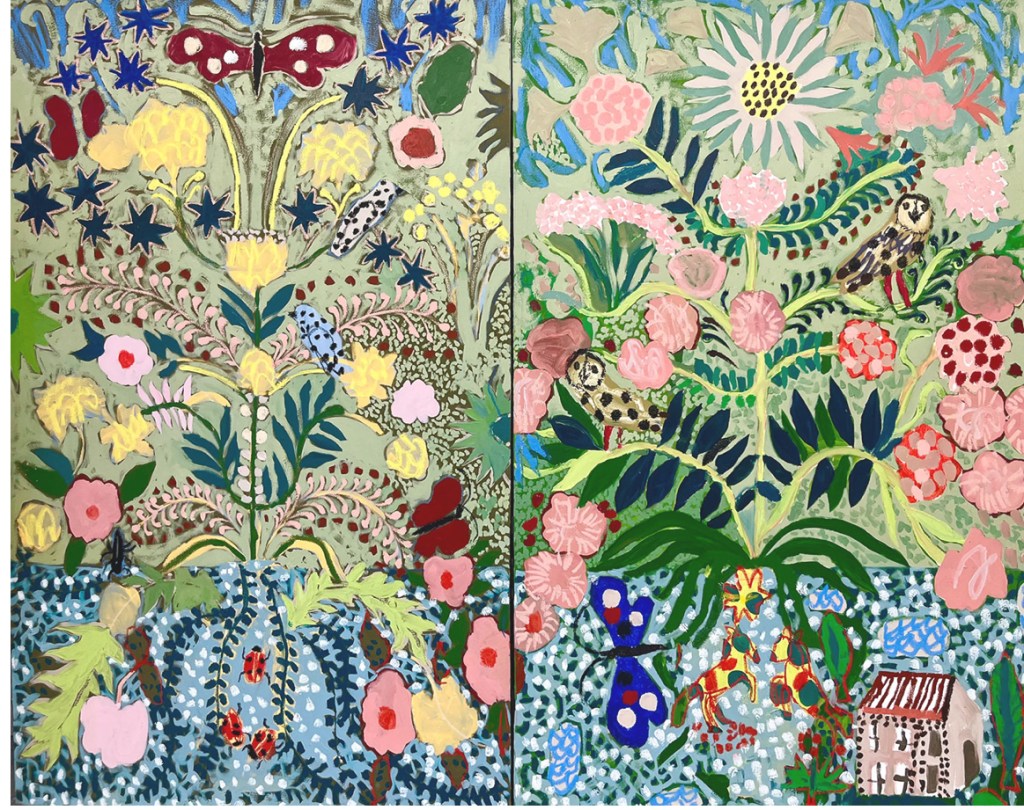
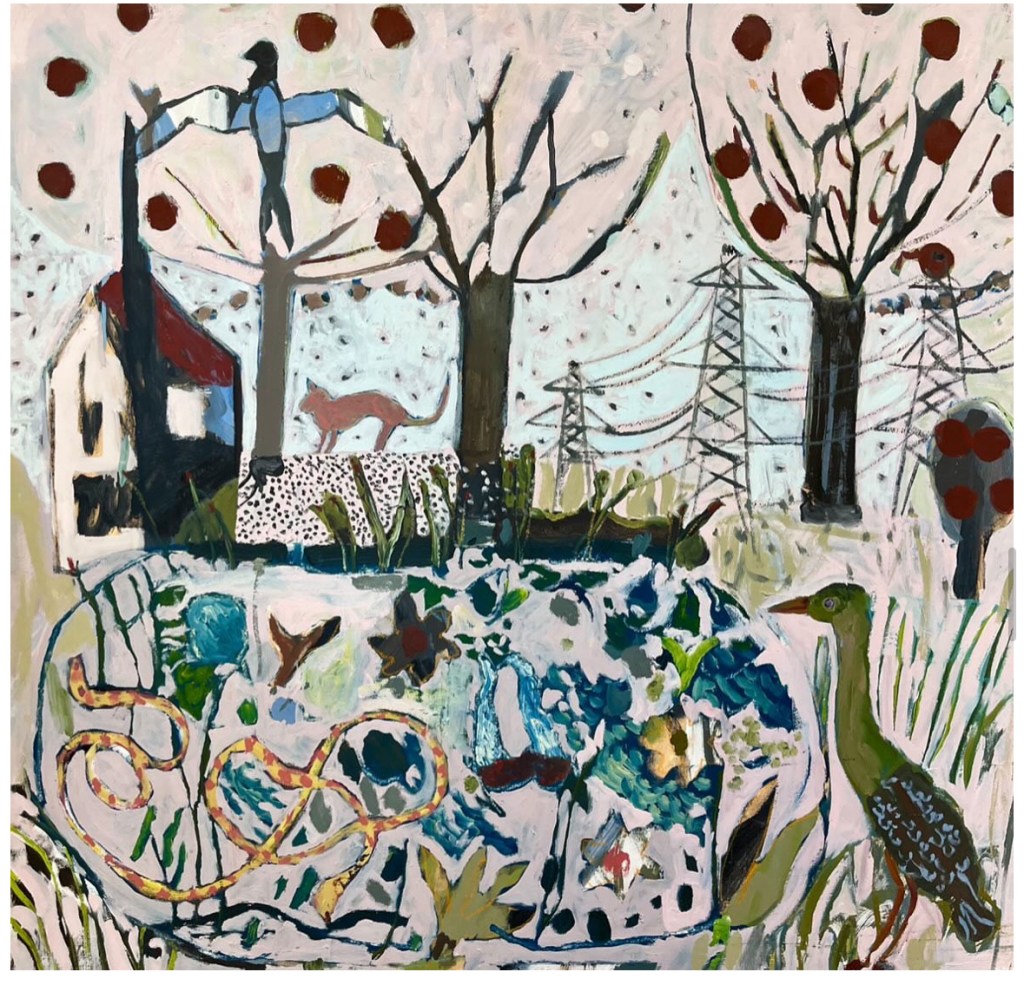
Inspirational artist of the week: Cornelia O’Donovan
Cornelia O’Donovan was born in 1981, and trained at the Royal College of Art, London.
O’Donovan plays with old folklore and poetry, but in a loose and dreamlike way. She draws particularly on tales native to the British Isles, and especially Celtic poetry and myth – from the tale of Prince Llewellyn’s grief at the sacrifice of his greyhound Gellert, to the figurative ballads of Ellen O’Leary and lines from WB Yeats.
Her paintings are flat, stripped of all perspective or realism, their surfaces hazy and meandering like an old tale retold a thousand times. Roughly rendered yet delicately arranged, she creates patterned compositions reminiscent of old tapestries, into which she plants naïve pre-Modern motifs. Outlines of old figures, ancient heralds, esoteric herbs and familiar animals all appear like inherited objects worn smooth by the touch of innumerable hands.
They retain the homespun quality of medieval rustic artworks, flowing across the canvas like a stroll through a country garden.



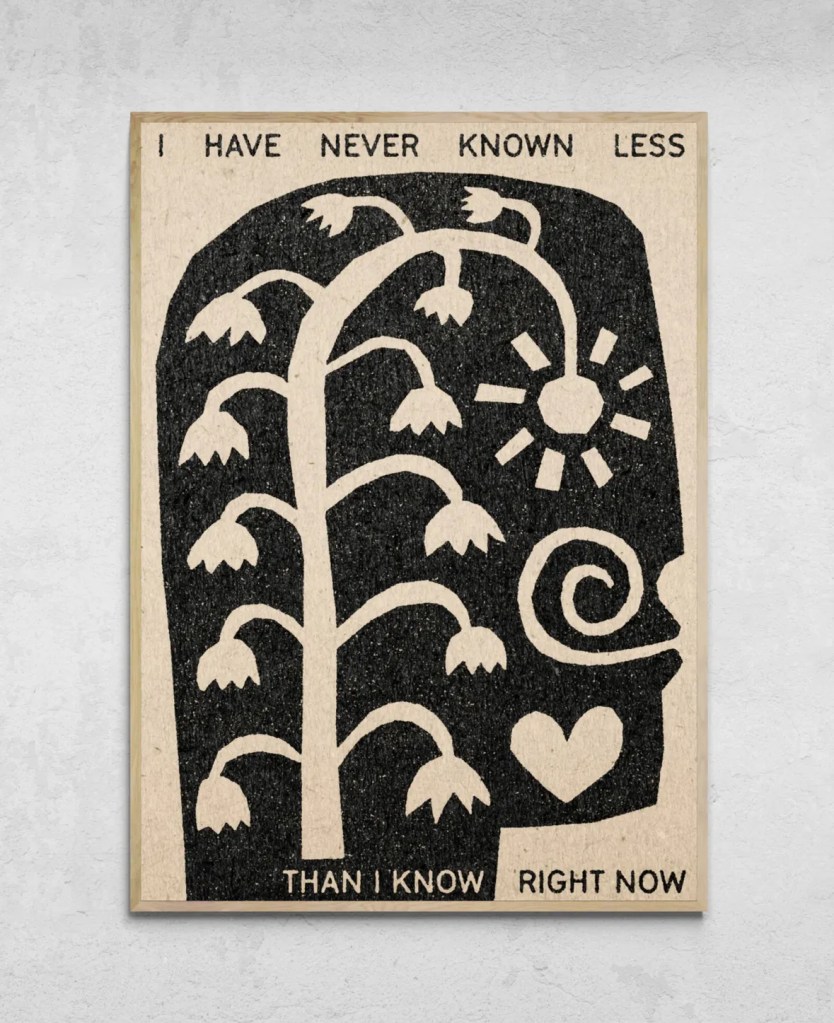
Hand lettering artist of the week: David Schmitt
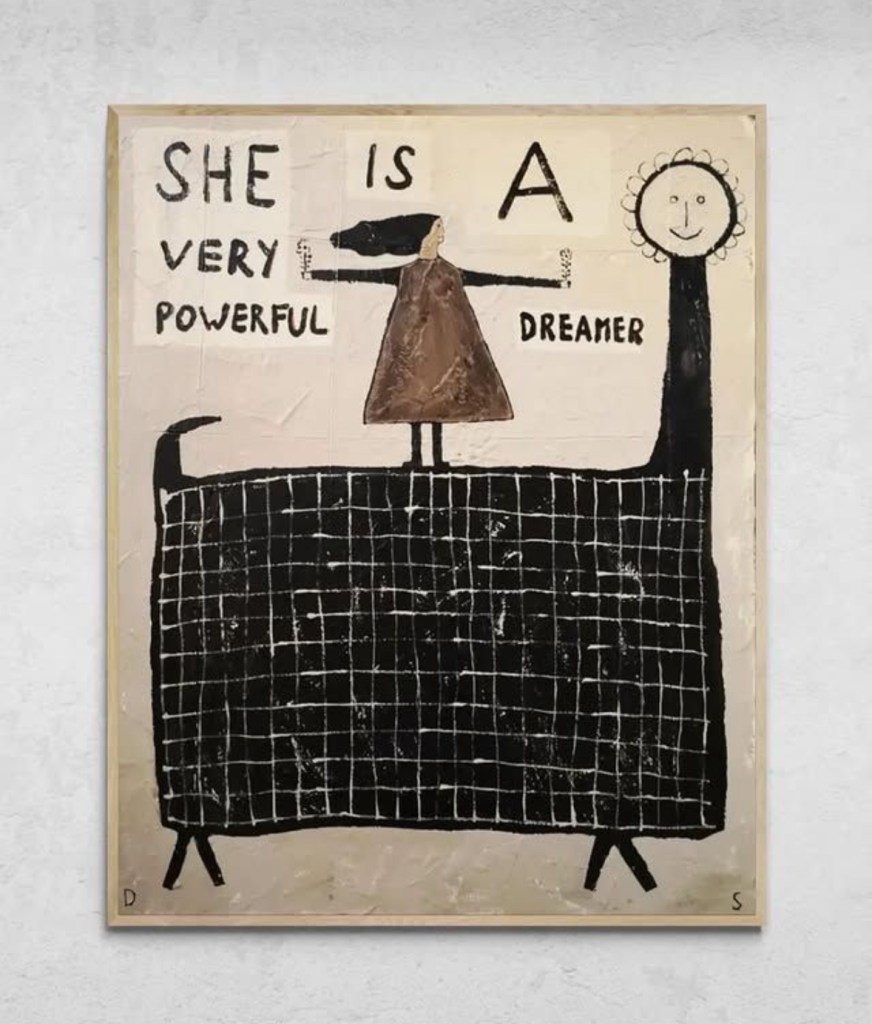
David Schmitt, born on March 11, 1994 in Bamberg, Germany is a self-taught painter and printmaker. After studying Graphic Design at the University of Applied Sciences in Augsburg he moved to Barcelona to pursue his career as an artist. In his work, he combines an archaic and childlike aesthetic with bold visual presence and commentary, highlighting texture and rough shapes to capture a timeless simplicity.
“I have always been drawn to a certain aspect of storytelling in painting, I think of it as a crossover between Folk-, Pop-, and Cave-art so for me it feels deeply human. There is so much beauty and truth to be found in traditional craftsmanship and old tales of folklore. I hope that we can continue to maintain our appreciation for the involvement of the human hand and mind with all its imperfections as preserving these practices means preserving the soul in the world that surrounds us.”




Words and Wildflowers Creative Prompts – Issue 42
Posted on April 28, 2025
We LOVE research and learning as a way to get inspired and boost ideas and creativity!! So, Kenzie and I are going to be sharing the inspiration that we collect here in our second newsletter…. once a week!!!
Here’s how it works:
We provide the inspiration. You interpret it however you wish… any medium, any size. It is meant to inspire lettering and floral art combined together. But, you can:
- Just do the florals, just do the lettering, or combine them together.
- Use the provided quote for your piece or select your own.
- Use colors from one of the inspiration images or select your own favorites
- Create the floral art… as a still life in a vase, a single flower, a border, a pattern, a bouquet
Hope you will create with us and post your work at #wordsandwildflowers2024 and tag @lorisiebert.studio and @snippetsofwhimsy
Quote of the week…
You’ll never get anywhere if you go about what-iffing like that.’ – Charlie and the Great Glass Elevator
-Roald Dahl
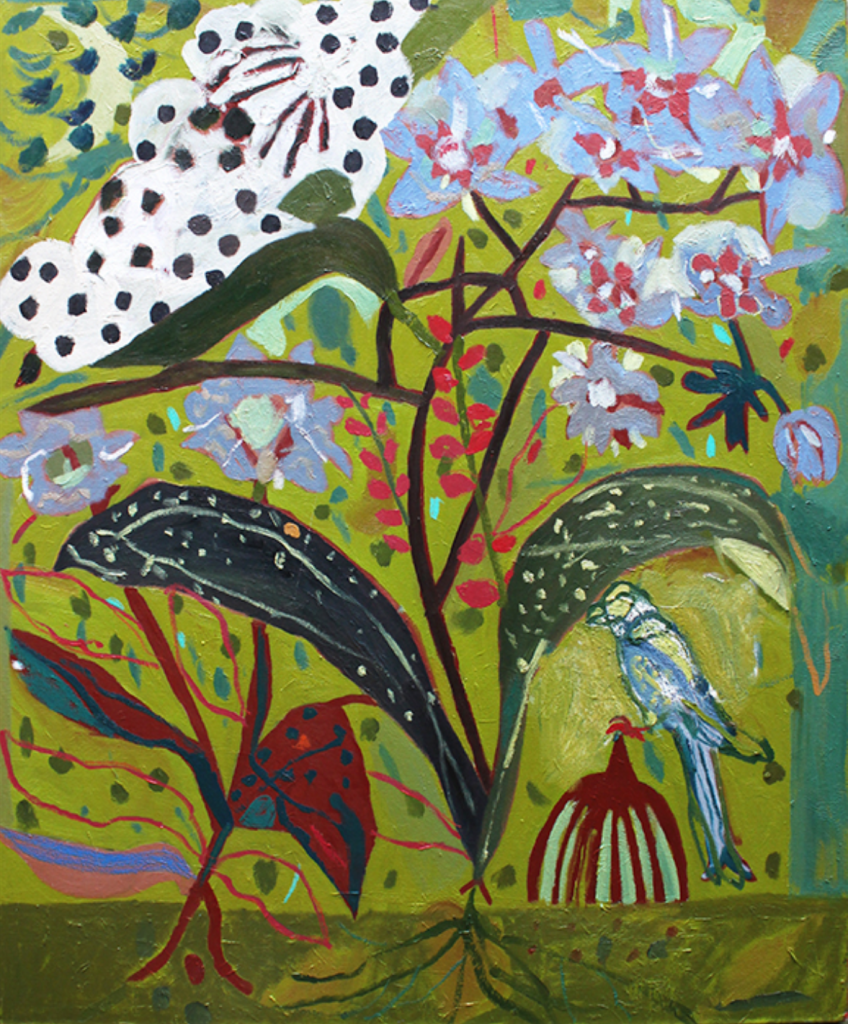
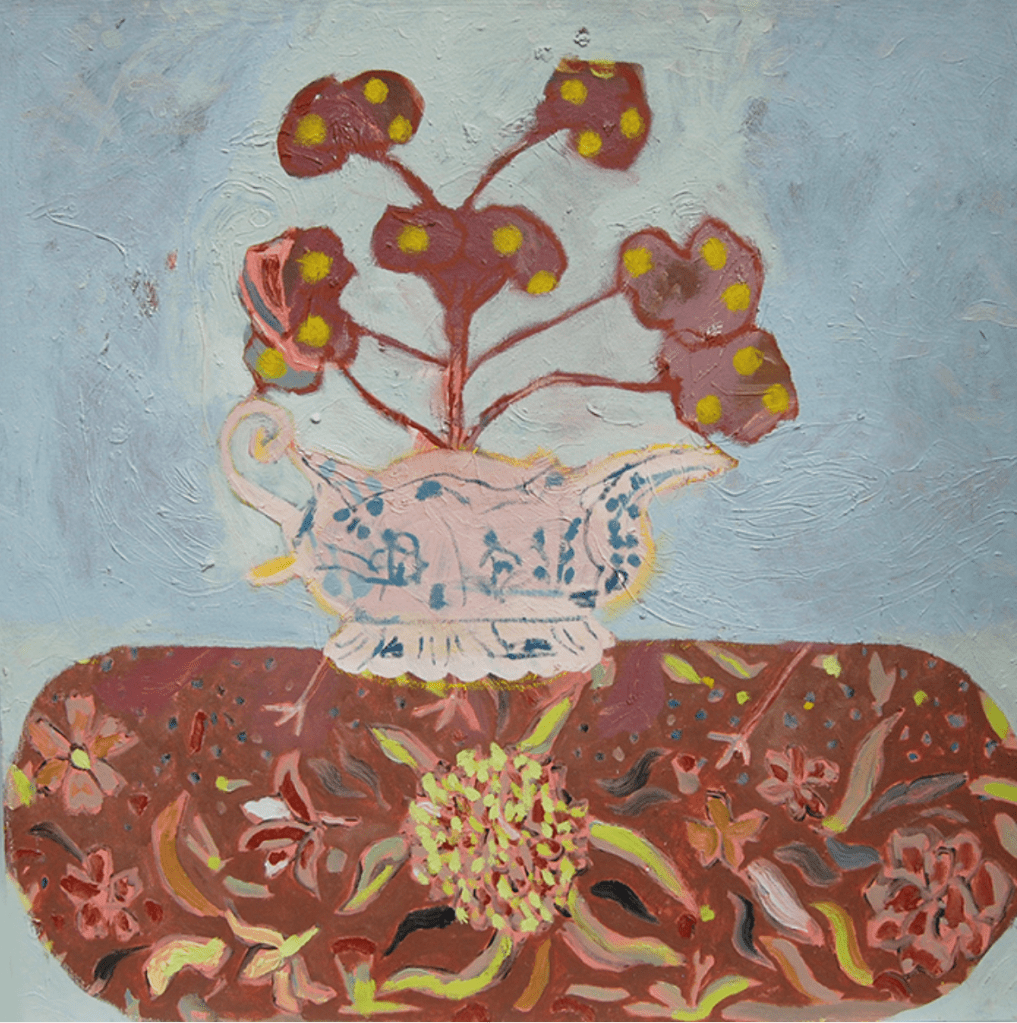
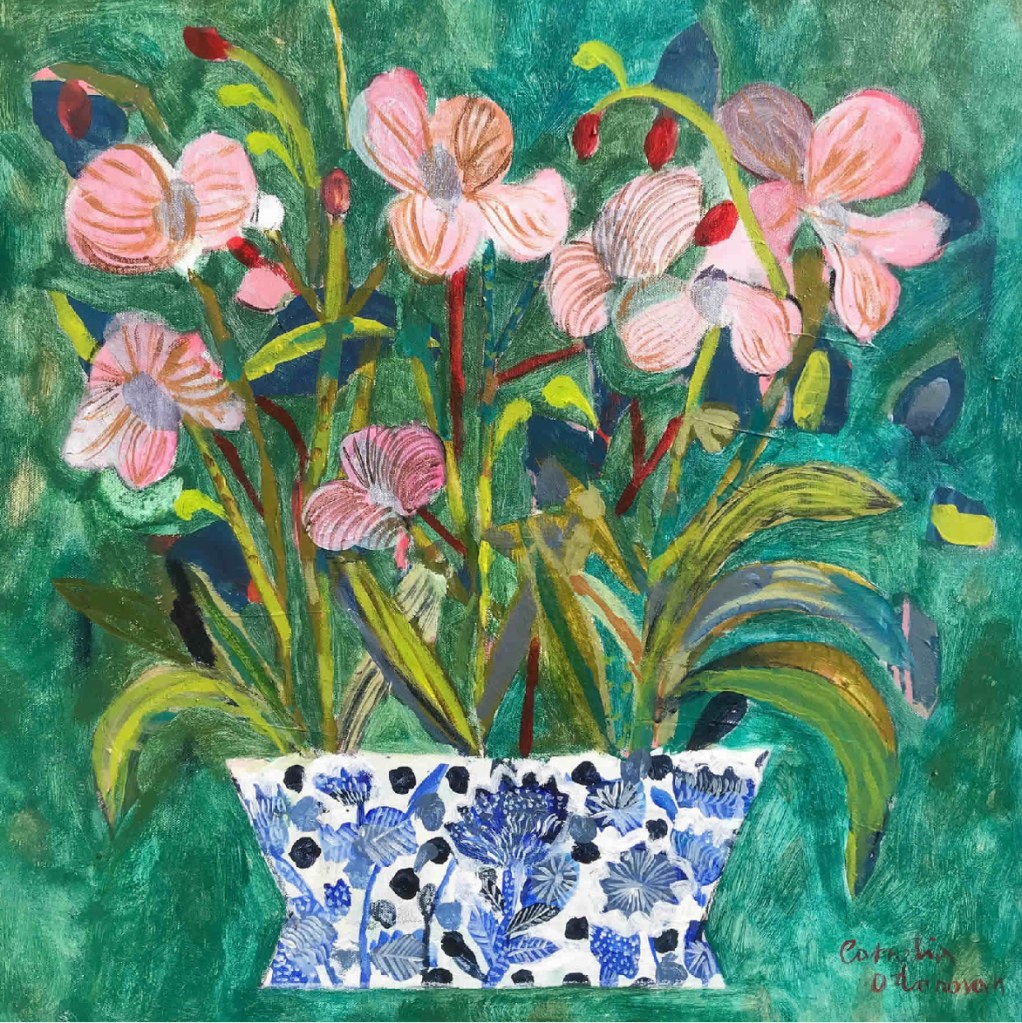
Inspirational artist of the week…Cornelia O’Donovan
Cornelia O’Donovan was born in 1981, and trained at the Royal College of Art, London.
O’Donovan plays with old folklore and poetry, but in a loose and dreamlike way. She draws particularly on tales native to the British Isles, and especially Celtic poetry and myth – from the tale of Prince Llewellyn’s grief at the sacrifice of his greyhound Gellert, to the figurative ballads of Ellen O’Leary and lines from WB Yeats.
She has designed ceramics for Anthropologie in the past. Her paintings are flat, stripped of all perspective or realism, their surfaces hazy and meandering like an old tale retold a thousand times. Roughly rendered yet delicately arranged, she creates patterned compositions reminiscent of old tapestries, into which she plants naïve pre-Modern motifs. Outlines of old figures, ancient heralds, esoteric herbs and familiar animals all appear like inherited objects worn smooth by the touch of innumerable hands.
They retain the homespun quality of medieval rustic artworks, flowing across the canvas like a stroll through a country garden.



Hand lettering inspiration of the week: Deloss McGraw
DeLoss McGraw is an American artist known for his whimsical gouache paintings. Inspired by his own poetry as well as poems by W.D. Snodgrass, McGraw’s dreamlike works are often reminiscent of paintings by Paul Klee. Klee like McGraw, was inspired by the works of folk artists and children. Born in 1945 in Okemah, OK, he went on study at the Otis Art Institute in Los Angeles and received his MFA from the Cranbrook Academy of Art in 1973. McGraw lives and works between Los Angeles, CA and Okemah, OK. Today, his works are in the collections of The Metropolitan Museum of Art in New York, the Cranbrook Museum of Art in Bloomfield Hills, MI, and the Library of Congress in Washington, D.C., among others.


 Lori Siebert & Co.